Viktor Werner · 6 October 2026
AI Integration Transforms Apex Programming Curricula Across Polish Specialized Institutions
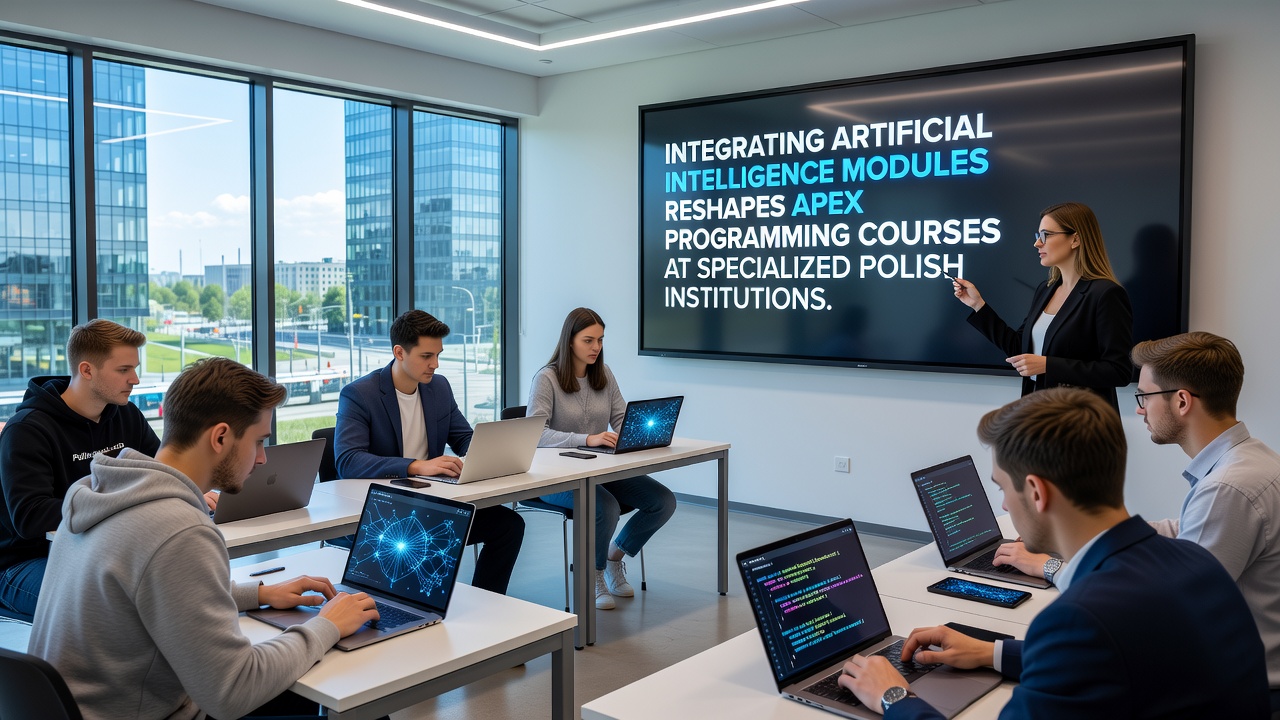
Specialized institutions in Poland have begun embedding artificial intelligence modules directly into Apex programming courses, creating new pathways that connect traditional Salesforce development skills with emerging machine learning techniques, adn this shift has gained momentum as educators respond to evolving industry demands for hybrid technical expertise.
Background on Apex Education in Poland
Polish technical schools and private training centers focused on Salesforce technologies have offered Apex programming instruction for several years, building curricula around core language features such as triggers, batch processing, and governor limits enforcement, yet recent additions of AI components now allow students to explore automated code generation, intelligent debugging assistance, and predictive analytics applied to data handling within the Apex environment.
Observers note that these institutions often collaborate with local technology firms to align course content with practical applications, while data from industry reports indicate steady enrollment growth in programs that combine Apex fundamentals with introductory neural network concepts.
Mechanics of AI Module Integration
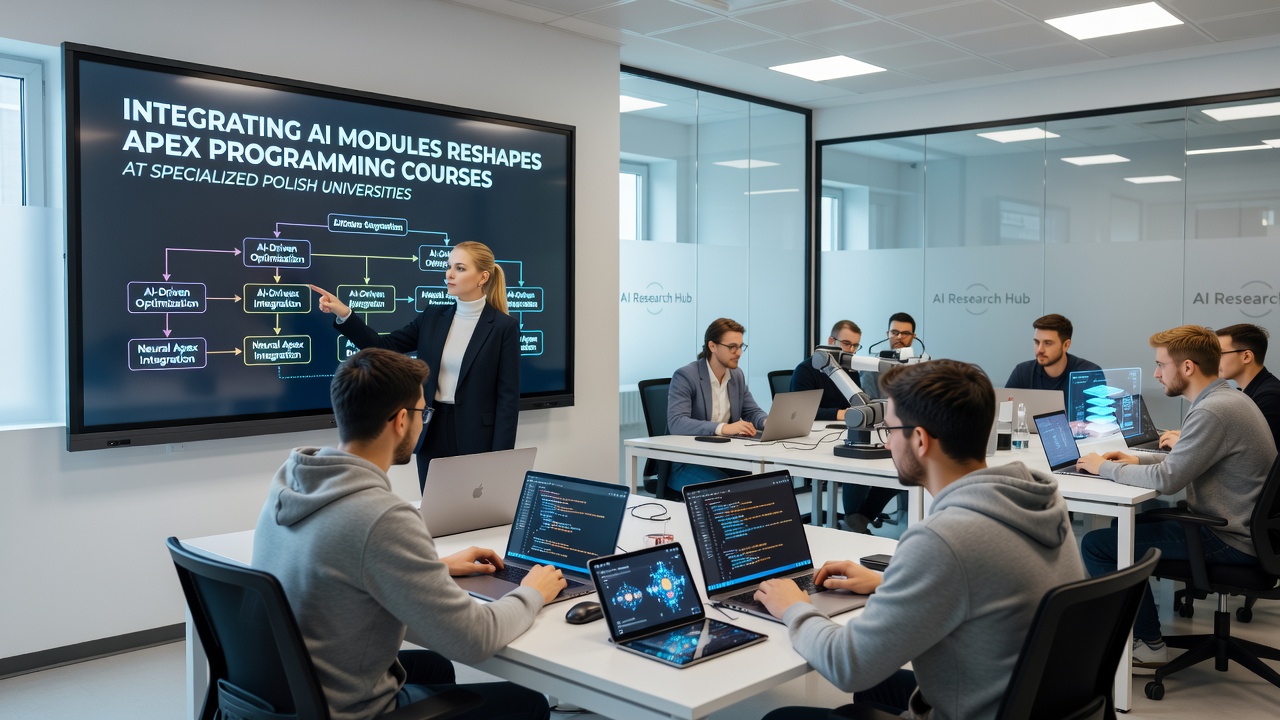
Course designers incorporate AI tools through dedicated modules that teach students to implement natural language processing for query optimization and to utilize reinforcement learning models that suggest improvements to Apex class structures, and these additions appear alongside existing lessons on Salesforce governor limits without displacing core syntax instruction.
Researchers have documented how such integration occurs in stages, beginning with basic exposure to Python-based AI libraries that interface with Apex via REST APIs, progressing to full projects where learners build custom Einstein-like prediction features inside Salesforce sandboxes, and this layered approach helps maintain focus on platform constraints while introducing computational intelligence methods.
Key Institutions Leading the Change
Centers such as those affiliated with apexclass.edu.pl have piloted these combined programs in major cities including Warsaw and Krakow, where instructors report increased student engagement when AI elements allow real-time visualization of code performance metrics, and similar initiatives have surfaced at other vocational academies that previously concentrated solely on declarative Salesforce configuration.
By October 2026 several of these programs plan to release updated syllabi that include dedicated units on ethical AI deployment within enterprise environments, reflecting broader European frameworks for responsible technology use.
Observed Outcomes and Supporting Data
Figures from internal assessments at participating institutions reveal higher project completion rates among cohorts exposed to AI modules, as learners apply automated testing frameworks to identify potential runtime exceptions before deployment, and this pattern aligns with findings from academic studies that examine technology education outcomes across Central Europe.
One documented case involves a cohort that developed an Apex-integrated recommendation engine using supervised learning techniques, resulting in functional prototypes that met both platform security requirements and performance benchmarks, while external evaluations from the European Commission on digital skills initiatives have highlighted comparable efforts in member states adapting programming education to include intelligent systems.
Another example comes from a partnership between a Krakow-based academy and a regional software firm, where graduates demonstrated proficiency in both traditional Apex deployment and AI-driven monitoring dashboards, prompting further curriculum refinements based on employer feedback collected through structured surveys.
Future Directions and Related Resources
Additional updates scheduled for late 2026 include expanded access to cloud-based AI sandboxes that simulate large-scale Apex workloads, allowing students to experiment with generative models that produce compliant code snippets under varying data volumes, and these developments build on existing resources such as those outlined in reports from the OECD on artificial intelligence in education.
Links to authoritative materials appear in course readings, including guidance from the European AI Act documentation and summaries available through the NIST AI Risk Management Framework, which instructors reference when discussing governance considerations alongside technical implementation.
Conclusion
The incorporation of AI modules into Apex programming courses at specialized Polish institutions continues to evolve through measured curriculum adjustments, collaborative projects, and alignment with continental regulatory standards, producing graduates equipped with expanded technical capabilities that span both established platform development and contemporary intelligent systems applications.